
This post was last updated on June 9th, 2026 at 10:07 am
Whenever I hear a parent’s story about their struggles dealing with a picky eater, I feel somewhat fortunate that we avoided a lot of those picky eater issues at our home. Yes, there are certain foods that our kids prefer. And we serve our fair share of frozen pizzas and ice cream. But my wife and I rarely have battles over our kids eating “adult foods,” particularly vegetables. Is there a secret to creating eaters with a rather broad palate? I’d say our strategy has revolved around this: Not giving our kids a lot of choices regarding the foods they eat.
From early on, we’ve made it clear that our kids, on most nights, do not have a say about “what’s for dinner.” They might ask, “What’s for dinner?” But we usually don’t ask them, “What would you like for dinner?” It has worked well enough all these years and certainly simplified cooking life in our household. This lack of choice became more or less routine for us.
Are there exceptions to this rule? Yes, absolutely. But usually those exceptions occur on a Friday or Saturday night when the parents are sick of cooking, anyway. That’s when the frozen pizzas or other highly processed foods make an appearance.
The other major exception is breakfast. Our kids have their choice of certain cereals, toast, fruits, yogurt, oatmeal, and hard-boiled eggs. It’s a different type of meal, which is why I’m focusing on dinner for this post.
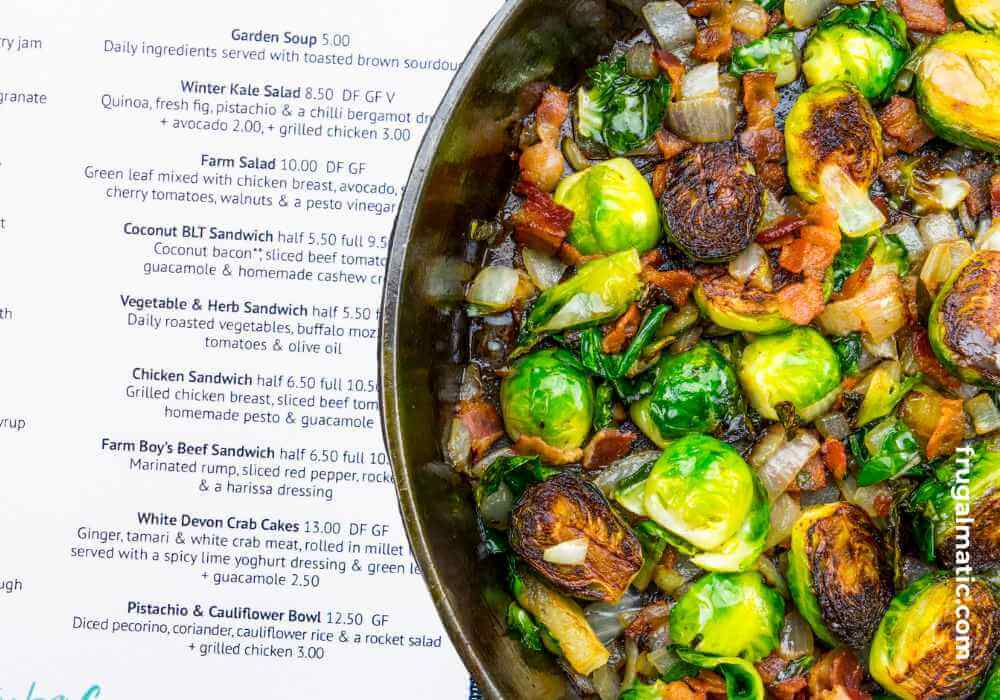
Now before anyone declares that our dinnertime rule is too draconian, I will say that we strive to make vegetables, in particular, as appealing as possible. Vegetables are the trouble spot for most families, and we approach this challenge by maximizing their flavor. That means we avoid steaming or boiling vegetable and instead roast them while generously adding spices. When your kids are asking for seconds of the brussels sprouts, that’s a good sign your recipe is a keeper.
Kids need to know: Veggies can be tasty
Growing up, I was a lot like our own kids. I wasn’t one to argue about food. That’s not to say I enjoyed everything on my plate. I distinctly remember trying to hide my brussels sprouts in a napkin and then taking that napkin to the bathroom and tossing it into the waste basket. That plan backfired, though, because a few days later the bathroom started to smell. Yep, I was busted. I also recall trying to dispose of these sprouts by “hiding” them in my milk. That wasn’t a smart move, either, because I’d be asked to finish my milk.
I think parents owe it to their children to cook veggies in a flavorful way. We want kids to know that these foods can be tasty. More important, we owe it to children to feed them healthy foods, even if they don’t care about things like fiber, which most of us need more of. The problem with picky eaters is that they typically crave processed foods. I mean, have you heard of a picky eater who insists on eating greens, beans, and whole grains? If your child “demands” whole foods and detests things like chicken nuggets, that’s not the kind of picky we’re talking about.
Don’t get me wrong. Our kids enjoy highly processed foods like any other. Heck, we all enjoy them. Once a week or so, our kids order hot lunch at school, and it almost always includes highly processed foods. But whether your child enjoys processed foods is not the issue. The question is: Will they eat whole foods at dinnertime, too? The answer to that, for too many families, is no.
Of course, I don’t mean to suggest that our family’s situation is the same as every family’s. This is a very personal topic, and some kids have legitimate medical or psychological reasons for not eating certain foods. I’m talking about kids without dietary limitations and whose parents stumble into the pickiness trap.
When kids order off the ‘adult menu‘
Our approach to dinnertime has worked, and I’ve seen the proof when we eat at sit-down restaurants. Years ago, our kids insisted on ordering off the “adult menu.” They didn’t want to be limited to chicken fingers and grilled cheese, typical fare on the kid’s menu. In fact, at a restaurant just recently our daughter ordered an antipasto dish loaded with greens and our son ordered sushi. I was the one who ordered pizza. It was a moment of vindication because they could have ordered “kids” food but didn’t.
Could they eat even better? Sure. I think most of us have room for improvement with how we eat. But this nationwide surge in picky eaters is a relatively new phenomenon, and it’s partly the fault of corporate food giants. Not too long ago, kids were expected to eat whatever adults ate. Only since the 1950s have we created a two-tiered eating system, in which kids and adults are expected to eat differently. That’s one of the conclusions I made after reading a book called, “Picky: How American Children Became the Fussiest Eaters in History.”
It boils down to this quote from the advertising manager of the Kellogg Company in 1953: “In the old days, children ate what their mothers bought; now the kids tell their mothers what to buy.”
Many companies have turned children against their parents, in terms of overriding the parent’s instinct to buy healthy foods. Parents have been told that good parenting means “empowering” kids to make their own decisions on food. But this is unwise because many kids lack self-control, and they’ll eat poorly if given that choice.
Uncrustables: The normalization of pickiness
Giving kids the power to choose is essentially what led to the creation of the most despicable kid-friendly food on the planet: Uncrustables. These manufactured peanut-butter-and-jelly sandwiches represent the highest order of pickiness. They are for children who refuse to eat the crust of a PBJ and will devote as much time as necessary to remove it. The Uncrustable streamlines pickiness, eliminating all friction from the experience. It is a great example of pickiness becoming normalized. Indeed, the child who eats a sandwich with a crust is now the abnormal one.
Arguably, the worst thing about Uncrustables is not that they fuel pickiness. It’s the price. Habitually eating processed foods is a double whammy: It’s expensive and unhealthy. You spend more for less nutritious food. In the grand scheme, pickiness goes against what it means to be frugalmatic because it’s anchored in consumerism. Pickiness is a form of consumption dependent on children persuading their parents to enrich certain food manufacturers. It sounds cynical, but you have to admit there’s truth to it.
Why a marketing discussion helps with food choices
For parents, a discussion about food choices benefits from a discussion about marketing and manipulation. With our kids, we talk a lot about advertising, in general, and I point out how what appears to be “fun” or “tasty” is also some company’s clever way of trying to get your money.
Is it OK to buy that stuff once in a while but just make sure you are buying it for your own reasons. If you buy Uncrustables for your child, then your child should understand what that product represents. They should recognize that it’s actually cheaper and healthier to eat a traditional PBJ. Parents, sometimes we need to be a Debbie Downer.
Of course, small kids will struggle to understand how companies seek to enlist them in the pursuit of corporate profits. That’s why limiting their choices can be helpful. When our kids were only 3 or 4 years old, my wife and I weren’t giving them marketing lessons. Those types of conversations happened several years later. Our solution at that early age was simply to eliminate choices, which set the tone as they grew older. It’s a mistake, I believe, to offer choices at an early age and then try to rein in those choices later. That seems like the perfect setup for dinnertime battles.
Trust me, it’s easier to guide kids toward healthier foods before they know to ask to eat highly processed foods. Create the rules before your kids suggest their own rules. Children are less prone to battling over food when there’s nothing to battle over. When kids believe they must eat what’s on their dinner plate, their parents have scored a major victory. After all, the best war to win is the one you never had to fight.